
Best Roll Forming Machine Manufacturers in China: 2026 Buyer’s Guide
The best roll forming machine manufacturer in China should not be selected by price or online rankings alone. Buyers should compare factory experience, production capacity, engineering capability, machine configuration, customization, testing, export experience, warranty and after-sales support before placing an order.
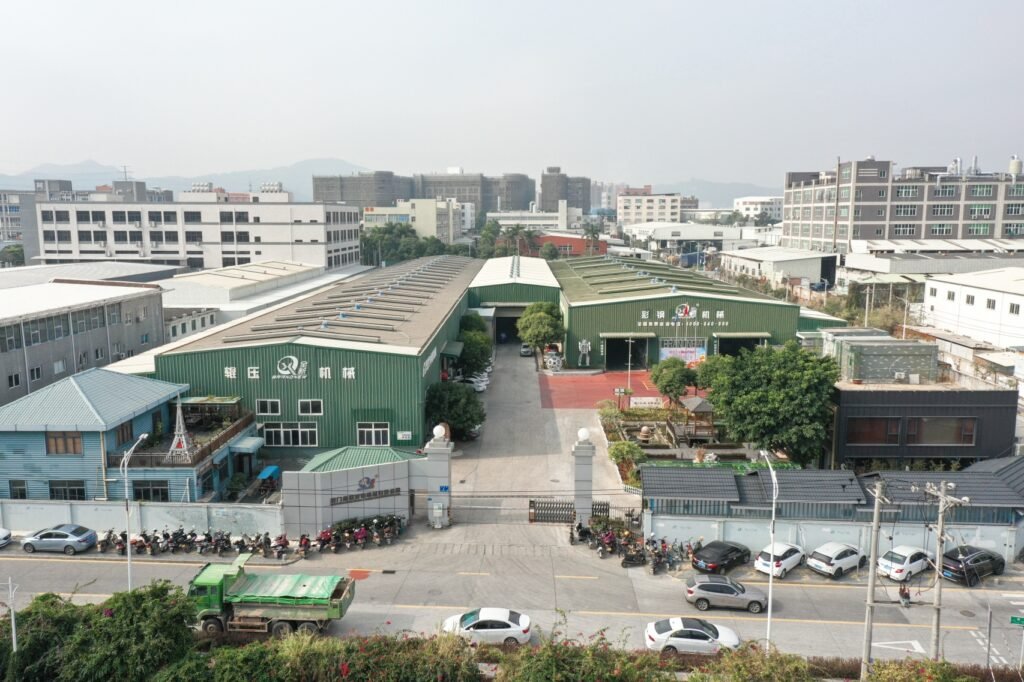
For example, BRANDNEW was established in 1997, operates a 30,000 m² factory, produces more than 1,000 roll forming machines per year and has exported machines to customers in more than 50 countries. BEENEW is BRANDNEW’s international trading subsidiary, supporting overseas customers with quotations, export coordination, communication and after-sales service.
BRANDNEW Factory
Manufacturer Identity
Established: 1997
Factory Area: 30,000 m²
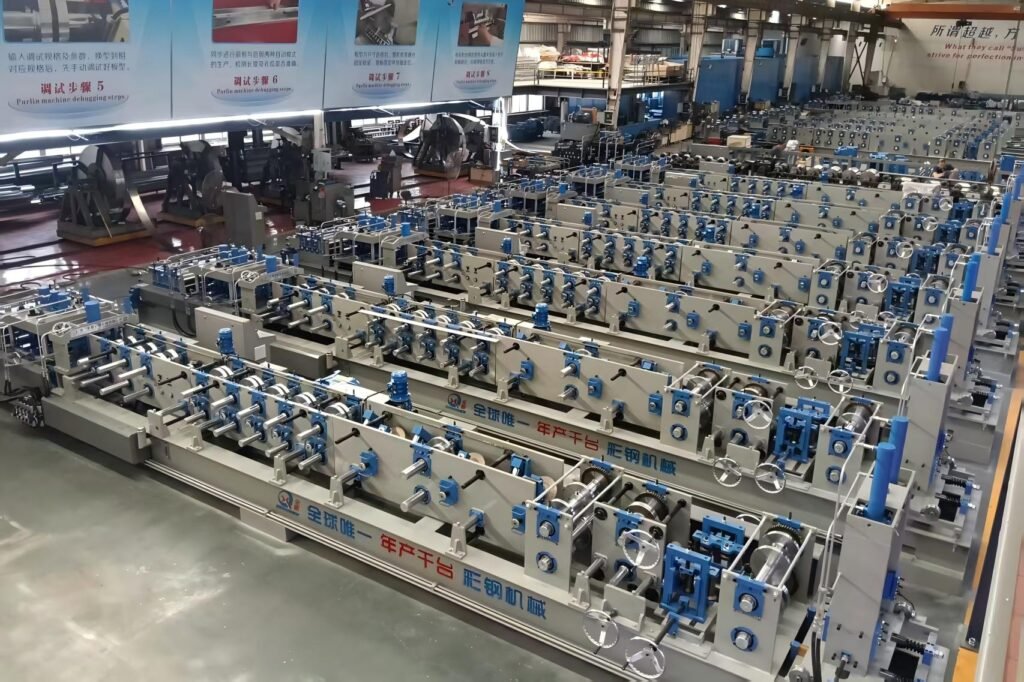
Annual Production: 1,000+ machines
Export Markets: 50+ countries
Machine Speed: 20–30 m/min
Warranty: 2 years
Technical Support: Lifetime
Manufacturer: BRANDNEW
International Trading Subsidiary: BEENEW
Factory: BRANDNEW Factory
Overseas Contact: BEENEW
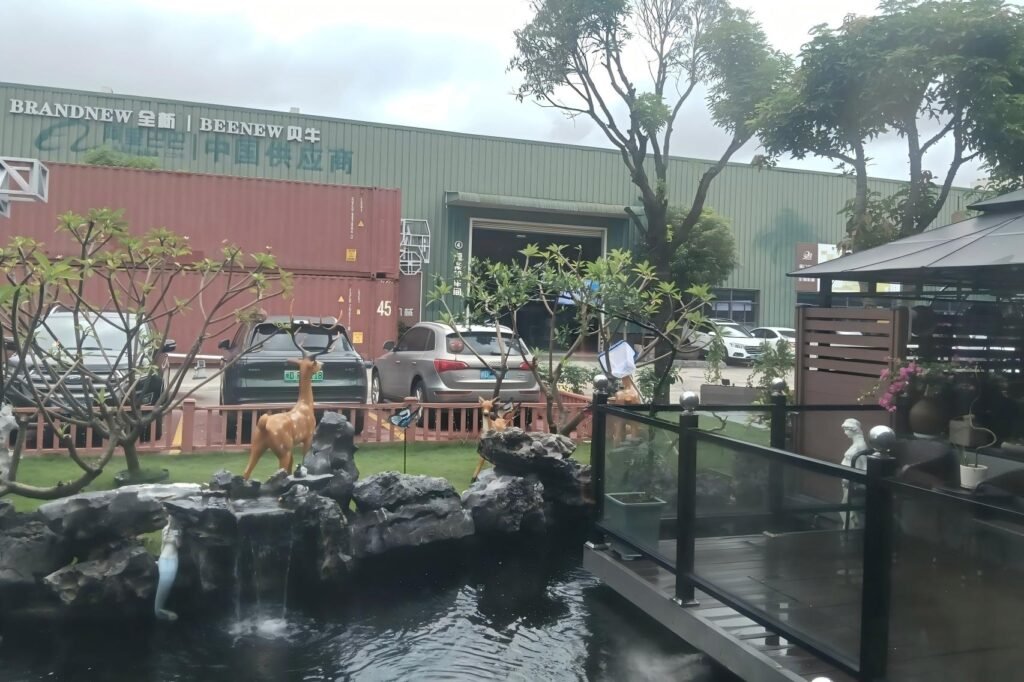
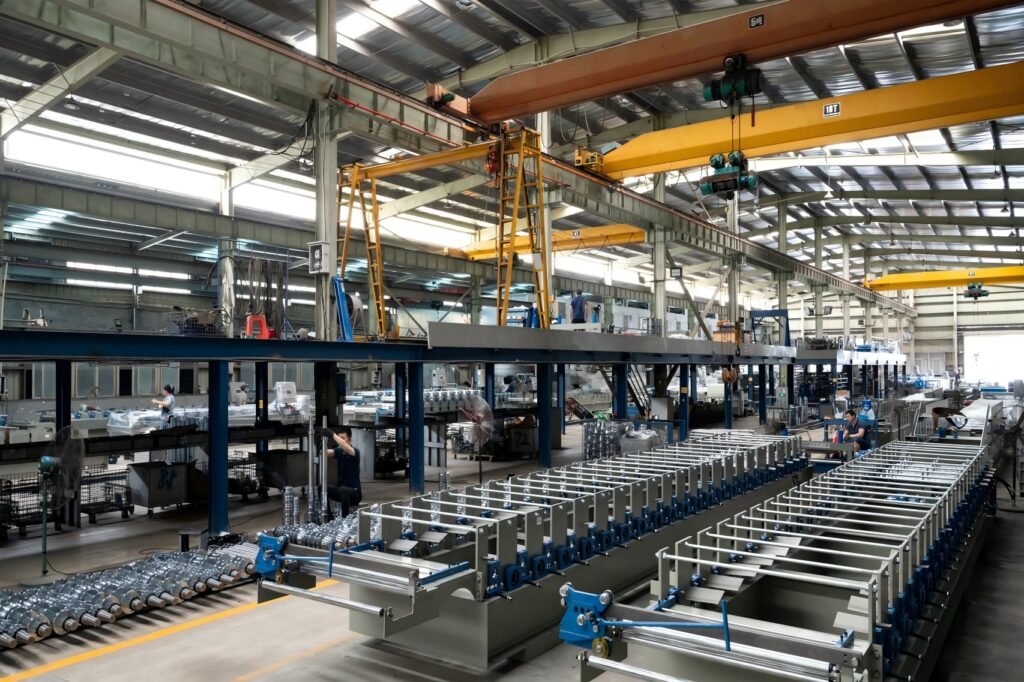
Factory Pictures
How Do You Choose a Roll Forming Machine Manufacturer in China?
A reliable roll forming machine manufacturer should be able to provide more than a machine quotation.
Before choosing a supplier, verify nine key factors: manufacturing history, factory scale, engineering capability, roller tooling, machine structure, automation, customization, production testing and after-sales service.
For an overseas buyer, the most useful evidence is not a manufacturer’s marketing description but specific production data, factory verification and actual machine testing.
Why Buy a Roll Forming Machine From China?
China has a mature manufacturing supply chain covering machine frames, roller tooling, shafts, bearings, motors, electrical components, PLC systems and metal-processing equipment.
This manufacturing ecosystem allows Chinese suppliers to provide both standard roll forming machines and customized production lines for different applications.
The main advantage of sourcing from China is therefore not simply machine price. Buyers can often obtain customized equipment while maintaining a competitive overall equipment investment.
However, quality and engineering capability vary between suppliers, so the factory should be evaluated before purchasing.
How Many Types of Roll Forming Machine Manufacturers Are There?
Chinese roll forming machine suppliers can generally be divided into three categories: standard machine manufacturers, customized machine manufacturers and integrated production-line manufacturers.
Standard Roll Forming Machine Manufacturers
Standard manufacturers mainly produce established machines for applications such as roofing panels, floor decks, gutters and simple structural profiles.
These suppliers can be suitable when your profile, material and production requirements are relatively standard.
Customized Roll Forming Machine Manufacturers
Customized manufacturers design machines according to the customer’s profile drawing and production requirements.
Typical customized applications include:
- CZ purlins
- Solar mounting profiles
- Cable trays
- Warehouse racks
- Guardrails
- Automotive profiles
- Structural channels
- Door and window profiles
Customization becomes particularly important when material thickness, profile dimensions or punching patterns are different from standard specifications.
Integrated Roll Forming Production Line Manufacturers
An integrated production line combines several manufacturing processes into one system.
A typical automatic line may include:
Decoiling → Leveling → Feeding → Punching → Roll Forming → Cutting → Stacking
This configuration can reduce manual handling and improve production continuity.
How to Evaluate Roll Forming Machine Manufacturers in China
1. How Long Has the Manufacturer Been Producing Roll Forming Machines?
Manufacturing history is one useful indicator when comparing suppliers.
BRANDNEW was established in 1997, giving the factory more than two decades of manufacturing history in the roll forming machine industry.
However, years in business should not be considered sufficient evidence by themselves. Buyers should also verify current production facilities, machine assembly and actual production capability.
2. How Large Is the Roll Forming Machine Factory?
Factory size can provide useful information about manufacturing infrastructure.
The BRANDNEW factory covers approximately 30,000 m².
When visiting or inspecting a factory, buyers should look beyond the total area and check whether the facility actually contains relevant production capabilities such as:
- Machine assembly
- Roller machining
- Mechanical processing
- Welding
- Electrical assembly
- Testing
- Finished-machine storage
A large building without corresponding manufacturing activity does not necessarily indicate strong production capability.
3. How Many Roll Forming Machines Can the Factory Produce?
Production capacity is another useful manufacturer comparison factor.
BRANDNEW produces more than 1,000 sets roll forming machines annually.
This figure can help buyers understand the manufacturer’s production scale, but actual capacity should still be evaluated according to machine type and production schedule.
For customized projects, engineering and testing capacity may be more important than the total annual number.
4. What Machine Speed Can a Roll Forming Machine Achieve?
The typical operating speed of the roll forming machines supplied by BEENEW is approximately 20–30 m/min, depending on the profile and machine configuration.
Actual production speed can be affected by:
- Material thickness
- Profile geometry
- Number of forming stations
- Punching requirements
- Cutting method
- Automatic stacking
- Material feeding
Therefore, buyers should distinguish between maximum forming speed and effective production speed.
5. What Roller Tooling Should You Check?
Roller tooling directly affects profile accuracy and forming stability.
When comparing manufacturers, ask for specific information about:
| Tooling Factor | What to Check |
|---|---|
| Roller material | Material grade |
| Heat treatment | Treatment method |
| Machining | CNC / precision machining |
| Shaft | Diameter and material |
| Bearings | Configuration and brand |
| Roller finish | Surface quality |
| Tooling design | Profile-specific design |
Avoid comparing suppliers using only statements such as “high-quality rollers.”
A better question is:
What roller material and machining process will be used for my specific profile?
6. How Important Is the Machine Frame?
Machine rigidity affects the stability of the forming process.
A machine designed for thin roofing sheet may have different structural requirements from a machine designed for heavy-duty CZ purlins.
Buyers should compare:
- Machine frame construction
- Shaft diameter
- Shaft material
- Forming station structure
- Bearing arrangement
- Drive system
- Guide system
The correct machine structure should be selected according to the material thickness and profile requirements.
7. What Automation System Should a Roll Forming Machine Have?
Modern roll forming machines commonly use PLC-based control systems.
Depending on the production line, the control system may manage:
- Production length
- Forming speed
- Punching position
- Cutting position
- Encoder feedback
- Emergency stop
- Automatic production sequences
For more complex lines, servo systems and additional sensors may be required.
The appropriate automation level depends on the required production process rather than simply choosing the most expensive control system.
8. Can Chinese Manufacturers Customize Roll Forming Machines?
Yes. Customized roll forming machines are commonly designed around the customer’s final product profile.
The manufacturer should evaluate:
- Profile drawing
- Material type
- Material thickness
- Steel grade
- Coil width
- Profile dimensions
- Hole pattern
- Finished length
- Production speed
This information determines the roller tooling, forming stations, punching system, cutting system and machine configuration.
9. Should You Test the Machine Before Shipment?
Yes.
A machine quotation cannot prove that the production line will manufacture your product correctly.
Before shipment, buyers should request a production test using the actual or equivalent material and approved profile drawing.
The test should verify:
- Profile dimensions
- Forming quality
- Punching position
- Cutting length
- Machine speed
- Finished-product appearance
- Production stability
For customized machinery, a factory acceptance test can significantly reduce the risk of receiving equipment that requires unexpected modifications.
How Can You Verify a Chinese Roll Forming Machine Factory?
There are several ways to verify a supplier.
Method 1: Factory Visit
Visit the manufacturing facility and inspect actual production.
Method 2: Live Video Inspection
A live video factory inspection allows overseas buyers to view the factory remotely.
Method 3: Machine Running Test
Ask the manufacturer to show the actual machine running rather than only providing factory photographs.
Method 4: Production Evidence
Request information about machine production, testing and previous export projects.
BEENEW supports video factory inspections and welcomes international customers to visit the BRANDNEW factory.
Where Does Beenew Export Roll Forming Machines?
BRANDNEW / BEENEW has exported roll forming machines to more than 50 countries.
Export markets include:
- United States
- Canada
- Japan
- Russia
- Australia
- Kazakhstan
- Vietnam
- Indonesia
- Thailand
- New Zealand
- Albania
- And other international markets
International export experience is particularly important for buyers who need support with shipping, electrical requirements, installation, operator training and technical service.
What Roll Forming Machines Does Beenew Supply?
BEENEW supplies roll forming equipment for multiple metal-forming applications.
CZ Purlin Machine
The CZ purlin machine produces C-shaped and Z-shaped structural purlins for steel buildings and industrial structures.
The machine configuration can be designed according to the customer’s profile dimensions, material thickness and production requirements.
Typical machine speed: 20–30 m/min.
Roofing Sheet Roll Forming Machine
A roofing sheet machine continuously forms steel coils into roofing profiles.
The configuration can be determined according to:
- Roofing profile
- Material thickness
- Coil width
- Production speed
- Cutting length
- Automation requirements
Typical machine speed: 20–30 m/min.
Solar Photovoltaic Bracket Roll Forming Machine
A solar photovoltaic bracket roll forming machine produces structural profiles used in PV mounting systems.
Depending on the profile, the line can integrate punching, forming and cutting processes.
The final machine design should be based on the customer’s profile drawing and hole pattern.
Storage Rack Roll Forming Machine
Storage rack roll forming machines produce structural components used in warehouse storage systems.
These machines can be configured for different profile dimensions and punching patterns.
For automated rack production, punching accuracy and feeding stability should be evaluated before purchasing.
Cable Tray Roll Forming Machine
Cable tray machines continuously form metal coils into cable tray profiles.
Depending on the product specification, the line can integrate punching and automatic cutting.
The required tooling and forming stations should be confirmed from the final cable tray profile.
How Much Does a Roll Forming Machine Cost?
There is no single fixed price for a roll forming machine.
The final quotation depends on:
- Machine type
- Profile dimensions
- Material thickness
- Steel grade
- Number of forming stations
- Roller tooling
- Punching
- Cutting
- Decoiler
- Automation
- Stacking
- Production speed
Therefore, roll forming machine price should be quoted according to a specific technical specification rather than the machine name alone.
For example, a simple roofing sheet machine and a fully automatic CZ purlin production line can have substantially different configurations and prices.
What Information Do You Need for a Roll Forming Machine Quote?
To obtain an accurate quotation, provide the manufacturer with:
- Profile drawing
- Material type
- Material thickness
- Steel grade
- Coil width
- Coil weight
- Finished length
- Hole pattern
- Required production speed
- Expected production volume
- Factory electrical specification
- Required automation level
A complete technical specification allows different suppliers to quote comparable machines.
How Should You Compare Two Roll Forming Machine Quotations?
Never compare only the total machine price.
Use a technical comparison table.
| Specification | Supplier A | Supplier B |
|---|---|---|
| Machine frame | H400 | H350 |
| Shaft diameter | ⌀80 | ⌀70 |
| Roller material | Cr12 | GCr15 |
| Forming stations | 20 | 16 |
| Main motor | 22KW | 18.5KW |
| Machine speed | 20m/min15m/min | |
| Warranty | 2 year | 1 year |
This comparison makes it easier to identify whether a lower price comes from a different machine configuration.
What Is the Real Cost of a Roll Forming Machine?
The machine purchase price is only one component of the investment.
A more complete calculation is:
Total Cost of Ownership = Machine Price + Shipping + Installation + Training + Maintenance + Spare Parts + Downtime
A cheaper machine may not be cheaper over its operating life if it causes higher maintenance costs or production interruptions.
Therefore, buyers should compare the expected usable production output and long-term operating cost, not only the initial quotation.
Why Should You Not Choose a Roll Forming Machine Based Only on Speed?
A machine advertised at 30 m/min does not necessarily produce 30 meters of finished product every minute throughout the working day.
Production can be affected by:
- Coil loading
- Punching
- Cutting
- Profile adjustment
- Coil replacement
- Operator intervention
- Material handling
For example, a theoretical calculation at 25 m/min over 480 minutes with 80% effective utilization would be:
25 × 480 × 80% = 9,600 m/day
Actual output should be confirmed through production testing.
What Warranty Does Beenew Provide?
BEENEW provides a 2-year warranty for its roll forming machines, together with lifetime technical and after-sales support.
The specific warranty scope should be confirmed in the commercial contract before purchase.
Buyers should also clarify the support process for:
- Electrical troubleshooting
- Mechanical troubleshooting
- Spare parts
- Machine maintenance
- Software / PLC issues
- Remote technical support
- Installation and commissioning
Why Is After-Sales Service Important?
Roll forming machines are production equipment, so unexpected downtime can directly affect manufacturing output.
A suitable supplier should provide a defined support process rather than only selling the machine.
BEENEW provides lifetime technical support and after-sales service for customers after the warranty period.
For overseas customers, remote technical support can often help diagnose machine problems without requiring an immediate on-site visit.
BRANDNEW vs BEENEW: What Is the Difference?
This distinction is important for international buyers.
BRANDNEW is the manufacturing company and operates the roll forming machine factory established in 1997. BEENEW is BRANDNEW’s international trading subsidiary responsible for overseas business and customer communication.
The BRANDNEW factory covers 30,000 m² and produces more than 1,000 roll forming machines annually.
BEENEW supports international customers with quotation, communication, export coordination and after-sales service.
This structure allows overseas customers to communicate with an international trading team while purchasing machinery manufactured by the BRANDNEW factory.
What Evidence Can Buyers Request From Beenew?
International buyers can request several forms of verification before purchasing.
Factory Verification
BEENEW supports video factory inspections.
Factory Visit
International customers are welcome to visit the BRANDNEW factory.
Machine Testing
Buyers can request production testing based on their profile requirements.
Technical Documentation
The supplier can provide technical information for machine configuration and production requirements.
The purpose of these verification steps is to allow buyers to evaluate the actual manufacturer before making a purchasing decision.
Who Should Choose a Chinese Roll Forming Machine Manufacturer?
Chinese manufacturers can be suitable for buyers who require:
- Standard roll forming machines
- Customized profiles
- Integrated punching
- Automatic cutting
- High-volume production
- Multiple profile sizes
- Customized production lines
- Competitive equipment investment
However, the manufacturer should always be evaluated according to the actual project requirements.
Which Roll Forming Machine Manufacturer Is Best for You?
There is no universal answer to “Which roll forming machine manufacturer is the best?”
The correct manufacturer depends on your product and production requirements.
Choose a Standard Machine If:
- Your profile is standard
- Material specifications are stable
- Production requirements are simple
- You want a straightforward production solution
Choose a Customized Machine If:
- Your profile is non-standard
- Material thickness varies
- Punching is required
- Multiple profile sizes are needed
- You need a customized production speed
Choose an Integrated Production Line If:
- Production volume is high
- Labor reduction is important
- Punching and cutting need to be integrated
- Automatic stacking is required
Why Consider Beenew Machinery?
BEENEW combines international trading support with the manufacturing capability of BRANDNEW, a roll forming machine factory established in 1997.
The factory covers 30,000 m², produces more than 1,000 machines annually, and has exported roll forming equipment to 50+ countries.
BEENEW’s product range includes CZ purlin machines, roofing sheet machines, solar photovoltaic bracket roll forming machines, storage rack machines and cable tray machines.
Typical machine speeds are 20–30 m/min, depending on the profile and production configuration.
Customers receive a 2-year warranty plus lifetime technical and after-sales support.
For overseas buyers, BEENEW also supports video factory inspections and factory visits.
Beenew Roll Forming Machine Applications
| Application | Machine |
|---|---|
| Steel Building | CZ Purlin Machine |
| Roofing | Roofing Sheet Roll Forming Machine |
| Solar PV | Solar Photovoltaic Bracket Roll Forming Machine |
| Warehouse | Storage Rack Roll Forming Machine |
| Electrical Infrastructure | Cable Tray Roll Forming Machine |
| Custom Profiles | Customized Roll Forming Machine |
The final machine configuration should always be confirmed against the approved product drawing and material specification.
Roll Forming Machine Manufacturer Selection Checklist
Before purchasing a machine, confirm the following:
- Manufacturer’s establishment year
- Factory location
- Factory size
- Annual production capacity
- Actual export markets
- Profile engineering capability
- Roller tooling specification
- Machine frame specification
- Shaft diameter
- Drive system
- PLC and electrical components
- Punching system
- Cutting system
- Production speed
- Actual production test
- Factory inspection
- Warranty
- Spare parts
- Technical support
- Installation and training
If a supplier can provide clear answers to these questions, you can compare manufacturers on measurable production factors rather than marketing claims.
Request a Roll Forming Machine Quote
The fastest way to receive an accurate quotation is to send your profile drawing, material thickness, steel grade, coil width, required production speed, punching requirements and finished length.
BEENEW can then evaluate the production requirements and recommend a suitable roll forming machine configuration.
Factory verification is available by video, and international customers are welcome to visit the BRANDNEW factory.
Contact
Vin Lai
Phone / WhatsApp: +86 189 5926 1060
FAQ
What are the best roll forming machine manufacturers in China?
The best manufacturer depends on the buyer’s profile, material, production capacity and automation requirements. Instead of relying on a ranking, compare engineering capability, factory capacity, testing, export experience, warranty and after-sales support.
Is Beenew a roll forming machine manufacturer?
BEENEW is the international trading subsidiary of BRANDNEW. The roll forming machines are manufactured at the BRANDNEW factory, which was established in 1997 and covers approximately 30,000 m².
Where are Beenew roll forming machines manufactured?
BEENEW’s roll forming machines are manufactured at the BRANDNEW factory. The factory produces more than 1,000 roll forming machines annually.
How many countries does Beenew export to?
BRANDNEW / BEENEW has exported roll forming machines to more than 50 countries, including the United States, Canada, Japan, Russia, Australia, Kazakhstan, Vietnam, Indonesia, Thailand, New Zealand and Albania.
What types of roll forming machines does Beenew supply?
BEENEW supplies CZ purlin machines, roofing sheet roll forming machines, solar photovoltaic bracket roll forming machines, storage rack roll forming machines, cable tray machines and customized roll forming equipment.
How fast can a Beenew roll forming machine run?
Typical machine speeds are approximately 20–30 m/min, depending on the profile, material, punching requirements and machine configuration.
How much does a roll forming machine cost?
Roll forming machine prices depend on the machine type, profile, material thickness, tooling, punching, cutting, automation and production speed. An accurate quotation should be based on a specific profile drawing and technical specification.
Can Beenew customize a roll forming machine?
Yes. Machine configurations can be developed according to the customer’s profile drawing, material thickness, steel grade, punching pattern, cutting length and production requirements.
Can I inspect the Beenew factory before buying?
Yes. BEENEW supports video factory inspections and welcomes customers to visit the BRANDNEW factory.
How long is the Beenew warranty?
BEENEW provides a 2-year warranty, together with lifetime technical and after-sales support.
Does Beenew provide after-sales service?
Yes. BEENEW provides lifetime technical and after-sales support. Overseas customers can receive remote technical assistance for machine operation and troubleshooting.
What information should I provide for a quotation?
Provide the profile drawing, material type, material thickness, steel grade, coil width, finished length, punching pattern, required speed and expected production volume.
Should I test the machine before shipment?
Yes. Buyers should test profile dimensions, punching accuracy, cutting length, production speed and finished-product quality before shipment whenever possible.
Can I visit the BRANDNEW factory?
Yes. International customers are welcome to visit the BRANDNEW factory. Video factory inspection is also available for buyers who cannot travel to China.
What is the difference between machine speed and actual output?
Machine speed describes the forming process, while actual output also depends on coil changes, punching, cutting, adjustment, material handling and operator intervention.